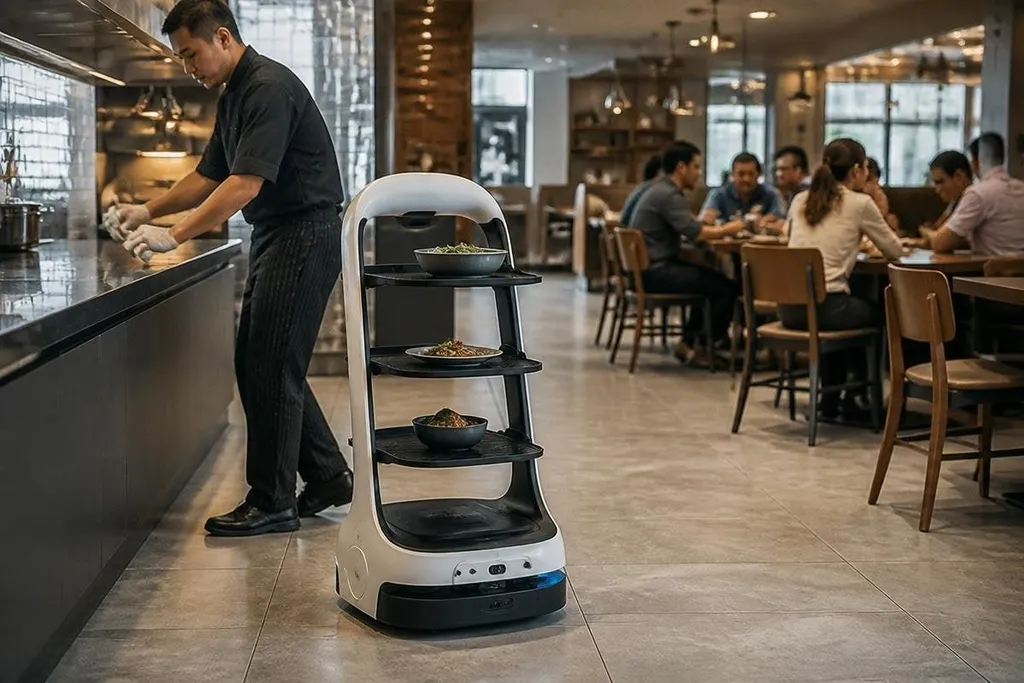
Restaurant automation can reduce some hand contact, repeat a cleaning task, or move food through a controlled route. It cannot tell a manager that a dirty surface has made a meal unsafe unless the system has the sensors, rules, and checks to support that claim.
For a restaurant manager, the useful question is where automation removes a known source of contamination and where it adds new cleaning work.
- Robots can limit contact with ready-to-serve food during delivery or service.
- Enclosed systems can keep ingredients on a defined route through the kitchen.
- Grippers, wheels, bins, and touchscreens still need cleaning and inspection.
Where robots can help
A delivery robot can carry a finished meal from the kitchen to a pickup point without a staff member carrying each order by hand. That may reduce contact during one part of service, especially when the robot uses a closed compartment that staff clean between tasks.
The benefit depends on the full route. A clean compartment does little if a worker touches the food container, the robot handle, and a payment screen without changing gloves or washing their hands. The robot changes one contact point; it does not remove the rest of the workflow.
Food preparation offers another possible use. The arm can portion ingredients or move a container along a fixed path. In a controlled setup, fewer people may touch the same food. The machine still needs food-safe materials, a design that allows access to hidden areas, and a cleaning method that reaches joints and seals.
This is where restaurant automation differs from a machine in a clean industrial room. Kitchens have grease, moisture, flour, heat, spills, and constant movement. One that looks clean from the outside may still collect residue around a gripper, wheel guard, or tray joint.
The hygiene risks robots add
Every robot creates surfaces that staff must inspect. Wheels can carry residue between areas. A gripper can move from raw ingredients to cooked food if the task rules are weak. A touch display can become a shared contact surface during a busy shift.
Software also matters. The system should record cleaning tasks, restrict unsafe task changes, and make faults visible to staff. Those records can help a manager check that a routine happened, but a completed software entry does not prove that a surface was clean.
Design decides how much work the robot creates. Smooth covers, removable parts, sealed cables, and easy access under the arm all make cleaning more practical. Crevices, exposed fasteners, and parts that need special tools push the job back onto staff.
A restaurant manager should ask for the cleaning instructions before signing a purchase order. The operating cost includes brushes, approved cleaning products, spare covers, inspection time, and training. A robot that saves one handling task while adding an hour of hard-to-check cleaning may give the kitchen a poor trade.
Hygiene needs a system around the robot
Robots can support a hygiene plan when their tasks fit the kitchen's existing controls. Staff still need clear rules for handwashing, glove changes, raw and cooked food, waste, spills, and equipment checks. The robot should make those rules easier to follow and verify.
A robot that touches food can add a new cleaning task if its gripper, tray, or wheels enter the wrong zone. Reports on restaurant robots from Robot24 can tie hygiene claims to the machine, task, cleaning method, and human checks recorded during a trial. Those details give a manager something concrete to review before setting stop, cleaning, and sign-off rules.
The strongest setup gives staff a quick way to stop the robot, remove a part, clean it, and record the check. It also gives supervisors a way to review missed tasks without relying on memory during a crowded service.
I’d treat a robot as a hygiene aid, not a hygiene plan. The machine earns its place when it removes a clear contact or handling problem and leaves staff with cleaning work they can perform every shift.
A practical buying check
Before a restaurant brings in a robot, check these points:
- Food contact: List every part that touches food, packaging, trays, or staff hands.
- Cleaning access: Confirm that workers can reach seals, joints, wheels, covers, and the underside.
- Task separation: Test how the system prevents a raw-food task from leading into cooked-food service.
- Cleaning records: Check what the software records and what still needs a human sign-off.
- Fault response: Ask how staff stop the robot, isolate a spill, and return the machine to service.
- Training time: Measure the steps, tools, and time needed for a normal cleaning cycle.
The next useful test is a full shift with the robot in its planned location. Track every surface staff clean, every interruption, and every point where food or packaging changes hands.
If that record shows fewer risks without hiding new ones, the robot may improve restaurant hygiene; if it does not, the kitchen needs a better process before it needs more automation.